Recent Posts

MARSEILLES MURMURS

Monday, 8 September 2014

'Hatchet' Gerard Kavanagh shot dead in Costa del Sol pub

Gerard Kavanagh was shot dead in a bar on the Costa del Sol Notorious gangster Gerard “Hatchet” Kavanagh was gunned down by two masked assassins yesterday as he relaxed in a Spanish pub.

The 44-year-old was riddled with up to nine bullets by the hitmen, who burst into the Costa del Sol bar in Elviria, near Marbella, just before 4pm Irish time on Saturday. A source said: “The shooting had all the hallmarks of a professional hit.” Terrified gangster Kavanagh tried to flee after spotting the assassins coming through the door of Harmons Irish Bar in Elviria, a 20-minute drive east of Marbella. But it was too late for the doomed crime boss, who fell to the ground in a hail of bullets surrounded by a pool of his own blood. A burnt-out BMW X3 was discovered nearby shortly after the shooting, which happened in broad daylight around 4pm Irish time. Spanish police were last night carrying out a forensic search of the vehicle to see if it was used as the getaway car. A source said: “The gunmen were wearing balaclavas and were dressed from head to toe in black. “The shooting had all the hallmarks of a professional hit. It looks like they picked a time when they knew the bar wasn’t going to be busy. “It is believed the victim was trying to flee when he was shot because many of the nine bullets he took hit him in the back.”

Notorious Irish gangster Gerard 'Hatchet' Kavanagh shot dead in Costa del Sol bar  A police spokesman said: “A fatal shooting has occurred near to Marbella. We are investigating.” Witnesses to the shooting told last night how the gunmen shot their victim in the back as he talked with a mystery woman – and finished the job off as he tried to run for his life. One said: “He was sat on a chair in a pair of green swimshorts talking to a woman I’d never seen before. “The men rushed up to him from behind and shot him two or three times in the back and, as he tried to run for the safety of the bar, finished the job off with a shot to the back of the head. “They turned him over to see if he was dead before fleeing. It was absolutely horrific. “The police took the dead man’s black Audi away and undertakers removed his body around 8pm.” Another said: “The killers left the engine on their getaway car running. “I’ve been told it was found burnt out at a supermarket just down the road.” A pal, who asked not to be named, said: “The dead man was lying face down just inside the door of the bar when I saw him. “He was dressed in just a pair of shorts and there was a lot of blood.” Harmons bar is sandwiched between two restaurants in a pretty, tree-lined square just off the N340 dual carriageway running along the Costa del Sol, which was once dubbed the Road of Death because of the number of accidents along it. The bar was closed last night after the horror shooting. A woman who answered a side door said: “Sorry we’ve got nothing to say. We’re not going to speak.” The owner of a neighbouring bar said: “I don’t want to say anything. This is very bad for business.” Kavanagh’s body was taken to the Costa del Sol State Hospital for X-rays last night to determine exactly how many bullets were in his body. Kavanagh, from Ben Bulben Road in Drimnagh, West Dublin, was a senior member of the notorious Kinahan gang, controlled by godfather Christy Kinahan, who is based on the Costa del Sol.

The gang is involved in drug debt collection, drug dealing on an international scale and is suspected of ordering several executions in Crumlin-Drimnagh feud. Kavanagh was jailed for four years in 1996 when he was just 25 for dealing heroin in the Crumlin area. Back then his defence had argued that Kavanagh was only before the court as he had developed a drugs habit forcing him to work as a courier for gangs. The Dublin Circuit Criminal Court was told that he was involved in a chain of drug distribution headed by drug barons. Following his sentence, Kavanagh paired up with Tallaght gangster Paul Rice, who was jailed for 10 years in July 1995 after pleading guilty to the robbery of a bank in which shots were fired. Together they rose to the top of the drug ladder before Kavanagh packed up and moved to Spain where he was reported to be supplying most of Tallaght and a large area of Drimnagh with illegal drugs. He has been living in Benalmadena for almost a decade with his wife and two children where his daughter is a star of the show-jumping circuit and his son is a professional boxer. Security sources say that the shooting has now raised fears for the safety of the Kinahans.

The scene of the shooting is near to the luxury Don Carlos Hotel, which this weekend is hosting the 19th US-Spain forum. The Spanish ambassador to the USA and the American ambassador to Spain were among guests who opened the three-day event and security had been stepped up significantly in the area. Kavanagh was jailed for four years in March 1996 after he was caught with €3,500 worth of heroin and cannabis. In court, Detective Eamonn Maloney said that Kavanagh was “a major figure in drug supplies in the Crumlin, Drimnagh and Dolphin’s Barn areas of Dublin for some time”. He was forced to flee Ireland after he was targeted by anti-drug vigilantes and the Crininal Assets Bureau.

Sunday, 7 September 2014

Irish man shot dead in suspected gangland murder in Spanish bar

Irish man shot dead in Spain was a well-known criminal who closely associated with some of the biggest drug dealers in Ireland and who gardaí believe was the intended target of a botched murder bid last month. The dead man, in his 40s and from Dublin, was singled out in a bar on the Costa del Sol on Saturday afternoon by two masked gunmen who fired at least nine shots, most of which are believed to have hit the victim.

The victim tried to run to safety when he saw the gunmen coming for him but collapsed on the premises when wounded. He was unresponsive when the emergency services later arrived at the scene. He was taken by ambulance to hospital but was pronounced dead shortly after arriving. The murder occurred just before 5.30pm local time at an Irish bar in Elivira, on the outskirts of Marbella. A BMW the gunmen are believed to have been driven to and from the scene in was later found burnt out by Spanish police.

Sunday, 31 August 2014

SCARFACE MURDER:A man identified as Amsterdam crime boss Samir B. was murdered in Benahavis, Marbella

A man identified as Amsterdam crime boss Samir B. was murdered in Benahavis, Marbella in Spain on Wednesday. image: inmo-andalucia.com The 36-year-old, also known as “Scarface,” was killed in the Spanish town near Marbella on Wednesday afternoon, Het Parool reports.


News reports speak of a gangland execution. Samir B. was in the Monte Halcones mall in the picturesque mountain village around 2.00pm when he was shot multiple times in his back and head by two assailants. He was apparently shot on his way out of a storefront in the shopping center. Witnesses called the authorities, but the emergency services could do nothing to resuscitate him.

The Dutch-Moroccan victim from near Sloterdijk in Amsterdam West has been named in connection with sizeable drug deals. Crimesite.nl writes that he was the largest drug dealer in the city, and he actually marked his cocaine blocks with his own stamp. B. had relocated to Spain a few years back, but apparently his hold on the Amsterdam underground remained. Het Parool writes that B. had a long career in the underworld of Amsterdam West. He grew to be one of the biggest crime bosses in the city.   In June 2010 he was arrested there and extradited to the Netherlands, in connection with the death of 12-year-old Danny Gubbels in Breda; the boy died when someone opened fire on his parent’s trailer and B. was named. He was released after only a few days in prison here, for lack of evidence.   His execution in Benahavis is being investigated by the local police, as well as the Spanish military police force, Guardia Civil, and national police agents. Earlier this month, another of Amsterdam’s criminal leaders, Derkiaoui van der Meijden, was also killed in Amsterdam Oost.

Monday, 25 August 2014

240 kilos of cocaine have been found in the hull of a yacht in Huelva

240 kilos of cocaine have been found in the hull of a yacht in Huelva Agents from the National Police, in collaboration with the United States DEA, have arrested six people; four in the province of Huelva and two in Madrid in the three searches carried out as part of the same operation. The investigation started at the beginning of April, when large amounts of cocaine has been arriving in Europe by sea, carried out by an international organisation. Further investigations revealed the head of the organisation is a Spaniard, who lives in Colombia, and who had returned to Spain recently, presumably, to coordinate a consignment of the drug. The rest of the organisation are all Colombian, and had the job of providing logistic support on land for the reception and extraction of the drug.

Marbella boxer ring return after trainer shot

MATTHEW MACKLIN, the Marbella based boxer, whose proposed fight against Argentine fighter, Jorge Sebastien Heiland in a WBC eliminator on August 30 was postponed after his trainer, Jamie Moore, was shot in Marbella, is set for a swift ring return. His opponent is as yet unnamed, however, Macklin is expected to undertake his 36th professional bout next month on September 27, on the Felix Sturm - Paul Smith WBA middleweight ‘Super’ title fight undercard in Kiel, Germany. If as expected Macklin wins, the three-time world title challenger expects to be returning to Dublin for the Heiland fight on November 15. Macklin, hopes the Heiland fight will bring him a fourth shot at a world title, as promoter Eddie Hearn looks to guide him to the big title that has eluded him so far.

Irish teenager being held on attempted murder charge in Costa del Sol

An Irish teenager is in custody on an attempted murder charge after a violent street fight on the Costa del Sol. The 17-year-old was part of a group of four Irish holidaymakers who got into a row over a girl during a night out in the upmarket resort of Puerto Banus near Marbella. His brother allegedly punched a friend unconscious before the teenager kicked him in the head as he lay on the ground. The victim was rushed to the nearby Costa del Sol Hospital before being transferred to a specialist centre in Malaga so he could be treated for “life-threatening” head injuries.

Doctors have told police he cheated death because of the rapid medical attention he received. The altercation happened around 3am on August 14 in a street a short walk from Puerto Banus port named after singer Julio Iglesias, who owns a house in mountains a short drive away. Investigators say they believe the four men, who had been out drinking together, rowed over a girl. Local police made the arrests at the scene after witnessing the assault from a distance. The injured man, who like the other three Irish holidaymakers involved has not been named, is now being treated in a normal ward after spending several days in an induced coma in intensive care. Police from a specialist anti-violence unit based in Malaga have led the investigation.

A youth court judge remanded the teenager to a young offenders’ institution after quizzing him in a closed court session. His brother, whose age is not known, has been released on bail but is thought to have had his passport taken away from him so he cannot leave Spain. A trial date has yet to be set. The Irish teenager is expected to be held for custody for several months before he is released ahead of trial. A source close to the case said: “The judge quizzed him on an attempted murder charge because medical experts who examined his alleged victim concluded the consequences of the assault could have been much more serious if he hadn’t received rapid medical attention.”

Friday, 22 August 2014

Climate change is gradually turning Spain into a fire zone

Spain’s changing climate and economy fuels wildfire risks.Climate change is gradually turning Spain into a fire zone – and a change in the economic climate is inflaming the situation.

The combined forces of climate, economic and social change are leaving Spain increasingly exposed to the damaging and costly effects of wildfires.

A research group reports that a mix of factors is behind the rise in both the numbers of forest fires and the areas of land scorched over the last 40 years.

Vanesa Moreno, a researcher in the geography department at the University of Alcalá in Madrid, and colleagues studied the pattern of fires in Spain from 1968 to 2010.

Although Spain, like much of southern Europe, is expected to become more arid with global warming, and although some Mediterranean vegetation is adapted to − and even benefits from − natural fire outbreaks, the picture is not a simple one.

In the moister Atlantic north-west of the country, there are two fire seasons − at the end of winter, and in the summer. In the Mediterranean region, fires are more frequent in the long, hot summer.


Monday, 18 August 2014

Fire in Benahavis

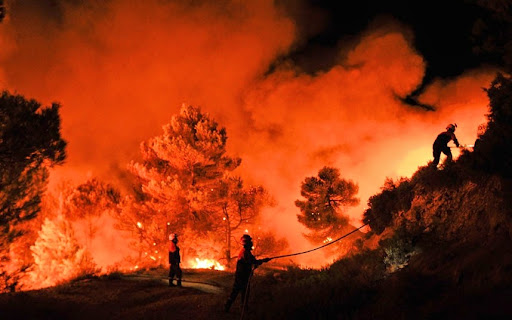
A fire has broken out in Benahavis, near Marbella. This photo was taken on the road between Estepona and San Pedro. The cause of the fire is still not yet known, but follows in the wake of a serious fire in Los Montes de Malaga exactly a week ago. The fire in Los Montes devestated 260 hectares of natural park. So far this year there have been 20 such fires in Malaga Province, which experts say is within the average range of annual fires.

Saudi prince's convoy in Paris attacked by gunmen

Heavily armed men have attacked a convoy of cars belonging to a Saudi prince, stealing 250,000 euros (£200,000; $330,000), police say. The convoy was heading through northern Paris on its way to Le Bourget airport late on Sunday evening when it was raided, reports say. The gunmen seized a vehicle carrying the money and documents, later releasing the driver and two others. The convoy was said to have come from the Saudi embassy. No-one was hurt. The gunmen, reportedly armed with Kalashnikov rifles, targeted a Mercedes mini-van at 21:15 (19:15 GMT) on the northern ring road, or peripherique, at Porte de la Chapelle, on the edge of Paris.

The motorcade, belonging to a Saudi prince, was targeted by eight people in two separate vehicles who pointed their guns at the driver of the Mercedes, forcing him to stop, French media reported.

The men then drove the vehicle away with the driver and the two other Saudis inside. No shots were fired but the Saudis were later freed and the vehicle eventually found burned out.

"In the vehicle there was roughly 250,000 euros in cash and official documents from the embassy," police union spokesman Rocco Contento told BFM TV news.

There has been a weekend of terror for immigrants in Tangiers

Immigrants who are waiting in Tangiers to cross into Spain have been attacked and their homes ambushed. The NGO’s at the scene fear the aggression against the Sub-Saharans will force them to try to cross the Strait to escape whatever the weather conditions.

The problem started on Friday near the Tangiers airport. The Sub-Saharan’s were told a bus was going to Spain and some 20 women and their children took up the offer. But the bus took them to a local dance festival of African culture called Twiza which was being held in Tangiers for some days. When they realised they had been fooled they returned home, and met a group of Moroccan men armed with machetes and sticks who started to hit them.

Five of the women suffered stab wounds and others suffered abuse. Spanish volunteer, Helena Maleno, was among them and believes the violence is being organised by criminal groups. She was sexually molested by one of the men. She said the Moroccans speech was always the same, ‘We want to clear up here, go to Spain’. Last year an immigrant died when he fell off a wall during a police raid, bringing charges of murderers against the police amid violent scenes as you can seen in the video below.

Sunday, 17 August 2014

Ebola Alert In Alicante After Man Taken Ill

An ebola alert has been activated in Alicante, Spain, after a young Nigerian man was admitted to hospital with fever and vomiting. Spanish health authorities activated alert protocols after the man showed "several symptoms" of the disease.

The alert comes a week after a Spanish priest who contracted ebola while working in Liberia died in hospital in Madrid. The man was taken ill in the eastern city of Alicante Father Miguel Pajares was the first European infected by a strain of the virus that has killed more than 1,000 people in West Africa.

He was airlifted from Liberia to Spain on August 7 after becoming infected while working for a non-governmental organisation there. The 75-year-old was flown to Europe for treatment with his co-worker Juliana Bohi, a nun who has since tested negative for the disease. Elsewhere, 17 ebola sufferers have fled a Liberian clinic raided by looters who stole blood-stained sheets - sparking fears the virus will spread.

Friday, 15 August 2014

ISIS terrorists discovered in Morocco

MOROCCAN anti-terror services working in collaboration with Spanish police officers have broken up a jihadist terror cell in Morocco. In total nine members of the cell, reported to be linked to the Islamic State of Iraq and Syria (ISIS), were detained on Thursday in the three Moroccan cities of Fes, Tetouan and Fnideq. The terrorists were working to recruit new members to the cell with the objective of sending them off to fight in the conflicts currently underway in Syria and Iraq.

It is believed that some of the group made frequent visits to the Spanish city of Ceuta, located on the north coast of Morocco, with the intention of converting people to their cause and raising financial aid. The Spanish Interior Minister has linked those arrested with ISIS, and confirmed that they had received training in the use of weapons and the manufacture of explosives with the goal of participating in suicide attacks or travelling to conflict zones in the Middle-East.

It has also come to light that there were plans to carry out a terror attack on Moroccan soil. Computers and other data-storage devices used by the jihadists are currently being examined for evidence of concrete plans. The investigation remains open within the three cities, with police from both nationalities continuing to work together. Government sources commented that the operation reflects on the excellent relationship that exists between Spain and Morocco when combating terror in the region.

Luggage thieves caught at airport

THE Guardia Civil have arrested two people under suspicion of stealing suitcases from distracted airport passengers. Within the Guardia Civil brief of the Safer Tourism Plan which has been put in place to prevent theft from tourists visiting Malaga, the officers at the airport have caught two people who were taking national flights with only hand baggage and then taking advantage of distracted tourists arriving at the baggage carousels to steal their luggage while they were looking away. On several occasions they also, allegedly, pick-pocketed passengers as well as taking their hand baggage while they were retrieving their check in luggage. Investigating officers calculate that they have stolen around €21,000 worth of luggage and wallets.

Ebola outbreak vastly underestimated

The death toll from the world's worst outbreak of Ebola stood on Wednesday at 1,069 from 1,975 confirmed, probable and suspected cases, the agency said. The majority were in Guinea, Sierra Leone and Liberia, while four people have died in Nigeria. The agency's apparent acknowledgement the situation is worse than previously thought could spur governments and aid organisations to take stronger measures against the virus. "Staff at the outbreak sites see evidence that the numbers of reported cases and deaths vastly underestimate the magnitude of the outbreak," the organisation said. "WHO is coordinating a massive scaling up of the international response, marshalling support from individual countries, disease control agencies, agencies within the United Nations system, and others." International agencies are looking into emergency food drops and truck convoys to reach hungry people in Liberia and Sierra Leone cordoned off from the outside world to halt the spread of the virus, a top World Bank official said. In the latest sign of action by West African governments, Guinea has declared a public health emergency and is sending health workers to all affected border points, an official said. An estimated 377 people have died in Guinea since the outbreak began in March in remote parts of a border region near Sierra Leone and Liberia. Guinea says its outbreak is under control with the numbers of new cases falling, but the measures are needed to prevent new infections from neighbouring countries.

"Trucks full of health materials and carrying health personnel are going to all the border points with Liberia and Sierra Leone," Aboubacar Sidiki Diakit president of Guinea's Ebola commission, said late on Wednesday. As many as 3,000 people are waiting at 17 border points for a green light to enter the country, he said. "Any people who are sick will be immediately isolated. People will be followed up on. We can't take the risk of letting everyone through without checks."

Arrested for allegedly throwing two suitcases of cocaine out of a hotel window

Poice have established that a 39-year-old Irish man who was arrested in Spain after allegedly throwing two suitcases of cocaine out of a hotel window is a criminal who was previously targeted here in a proceeds-of-crime case. The suspect, who remains in custody in Valencia, has been named as Philip Grendon from Greenfort Drive, Clondalkin, and also with an address at Spiddal Road, Ballyfermot. Grendon's brother, Brian, is a member of a major west Dublin drugs gang who have been constant targets of gardai for 15 years. Already this year, officers based in Ballyfermot have been involved in the seizure of more than €1m worth of drugs from this crew who are considered one of the most organised and longest-established in the country.

The bizarre incident for which Grendon was arrested in Valencia happened last Friday just before 10pm at the four-star Tryp Valencia Oceanic Hotel. Police are said to be working on the theory that the alleged drugs trafficker, who had checked into the hotel a few hours earlier, confused noise from other guests entering and leaving their rooms with a rival gang trying to steal his drugs after suffering a paranoia attack. It is alleged that Grendon also removed ceiling tiles in his room, along with an air vent in an apparent attempt to hide the stash.

The 55kg of cocaine in the cases would have an estimated street value of more than €3.8m in Ireland. Sources who know Grendon say they are "surprised" that he would be trusted by a gang to be in charge of such a huge drugs haul. "Philip was always known to be a paranoid individual, but if what the Spanish police are saying is true, this is taking paranoia to a whole new level," a senior source said. Grendon's younger brother is convicted heroin dealer Brian Grendon (37), who was jailed for six years in December 2002 after he was busted with almost €2m worth of heroin in Palmerstown, west Dublin, the year before. shootings Brian Grendon was previously described in court by a senior detective as being linked to a gang who had in the past "used fatal shootings of anyone who compromised their business".

Philip Grendon appeared in court in Dublin in February 2012 when gardai prosecuted him under proceeds of crime legislation. Some of his associates were targeted by gardai as part of Operation Jumbo in 2002. They included murder victim David McCreevy (23), who was shot dead in Tallaght in 2002.

Wednesday, 13 August 2014

Spain to probe cigarette smuggling Crime.


EU's anti-fraud office on Monday urged Gibraltar and Spain to launch legal action after it found signs that organised crime was behind a rise in cigarette smuggling in southern Spain, AFP reports. The European Anti-Fraud Office (OLAF) made the recommendation after completing a probe it launched in August 2013 at the request of Madrid into a sharp rise in cigarette smuggling across the border between Gibraltar and Spain between 2009 and 2013. "The OLAF investigation has raised a number of concerns regarding the link between a significant increase in the size of the Gibraltar market for cigarettes over the past four years and the subsequent increase of cigarette smuggling across the frontier," a spokesman for the anti-fraud office said. "The concerns include indications of the involvement of organised crime," it added. "The OLAF final case report, and recommendations to initiate judicial proceedings related to the findings of the report, have been sent to the Spanish General State Prosecutor and to the Gibraltar Attorney General." Widespread cigarette smuggling between the tiny, low-tax British territory of Gibraltar to Spain is a major irritant in their frayed diplomatic relations. Smugglers buy the cigarettes in large volumes in Gibraltar at a price much lower than is charged in Spain, where the government in 2012 increased the sales tax to help plug a gaping public deficit. Spain in August introduced stringent border checks at its border with Gibraltar, leading to lengthy queues for motorists, in what it said was a move aimed at clamping down on cigarette smuggling.
But Gibraltar argues the stepped-up border controls are in retaliation for the installation of an artificial reef in its waters that has prevented Spanish boats from fishing there. Gibraltar Chief Minister Fabian Picardo welcomed the anti-fraud office report and said the territory wanted to work together with Spain to investigate the cigarette smuggling. "We wish any necessary investigations in this and in all areas to be carried out jointly between the competent Spanish and Gibraltar authorities in a genuine spirit of cooperation," he said. The government of Gibraltar said cigarette smuggling was already being brought under control thanks to the "draconian" measures it introduced in January. These include the introduction of searches of vehicles crossing into Spain and giving customs and police officers greater powers to fight smuggling. The Spanish government meanwhile said the anti-fraud office's report "justified" its "work in the fight against fraud and the underground economy". Spain ceded Gibraltar to Britain in 1713 but has long argued that it should be returned to Spanish sovereignty. London says it will not do so against the wishes of Gibraltarians, who are staunchly pro-British.

First Spaniard dies of Ebola

confirmed by the Madrid's health department that a 75-year-old Spanish priest, Miguel Pajares has died in Madrid’s Carlos III hospital from Ebola. The Spanish priest who was recently repatriated from Liberia, Africa last Thursday had been in isolation in Saint John of God hospital in the capital of Monrovia. It is known that he contracted the Ebola virus from the Director of the Hospital after a visit. The director is also known to have died. Miguel Pajares was being treated with an experimental drug ZMapp which is designed to fight the deadly virus, but failed to respond to the medication.

The drug ZMapp is a treatment that is made by a private US company and is still in intensely early stages and had previously been only tested on monkeys. In a statement the health ministry said that the drug arrived to the hospital late on Saturday evening to treat the 75-year-old. The drug ZMapp though in very early stages, was only allowed by the Spanish drug safety agency under “exceptional importation” to be used in the use of a non-authorised medication because of an incident where a patient’s life is in danger.

Expats could be forced to return home under new government tax proposals affecting rental property in the UK.

  The plans, forwarded by the Chancellor George Osborne, would see the removal of personal tax allowance privileges for overseas residents who also claim income in the UK. If the Chancellor goes ahead with the plans, couples drawing a government pension could also face a £4,000 (€5.000) cut in their yearly income, forcing many to return home. UK government pension plans are only taxable in Britain, meaning that former civil servants living abroad could see a rise in their tax obligations.

Under the current system, expatriates and EU nationals have UK-earned income offset with a personal tax allowance of £10,000 (€12.570), but the planned reforms could jeopardise those expats who live under a carefully considered budget. Up to 400,000 expats could be affected by the proposals which would inject the treasury with an extra £400 million (€503 million) a year.

Threat of EBOLA as 224 african immigrants rescued off Spanish coast

Maritime rescue vessels picked up a total of 224 people from 23 dinghies in the Strait of Gibraltar on Monday morning.  Both men and women, believed to all be Sub-Saharan Africans, are reported to be in a good state of health. They are currently being moved to Tarifa where they will be attended to by Red Cross volunteers.

Thursday, 7 August 2014

Spain: INTERPOL Targets Trafficking Of Stolen Vehicles

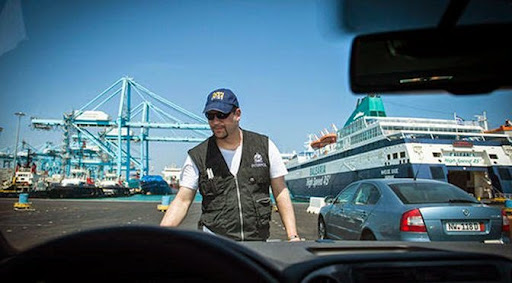
In an INTERPOL-supported operation in Spain targeting the trafficking of stolen vehicles, nearly 20 vehicles were recovered and some 15 individuals arrested. Led by the Spanish National Police, Operation Paso del Estrecho (which means ‘crossing the straits’), was conducted from 28 July to 1 August at the port of Algeciras in southern Spain, a known route used by organised criminal networks to smuggle cars stolen from throughout Europe into North Africa.

With the assistance of INTERPOL’s Stolen Motor Vehicles (SMV) unit, police monitored car ferries leaving the port en route to Morocco, with some 5,000 vehicles screened against INTERPOL’s SMV database. INTERPOL coordinated the deployment of 28 experts from seven countries to support the operation. The experts are members of the INTERPOL Stolen Motor Vehicles (SMV) Task Force, comprising police and private investigators who support member countries with operations targeting the theft and trafficking of motor vehicles. The INTERPOL SMV database contains more than 7 million records submitted by 128 member countries. In 2013, countries searched the database more than 125 million times, resulting in 117,000 positive hits. “Operation Paso del Estrecho was very important because it allowed us not only to detect and recover stolen vehicles from Spain and other European countries, but also to obtain crucial information that will allow us to continue our investigations into the organized crime groups dedicated to illegal vehicle trafficking,” said Ángel Arroyo Morales, Head of the vehicle crime investigation unit of the Spanish National Police Central Squad of Organized Crime. “There is no doubt that with strong cooperation between INTERPOL and police across Europe and beyond, we will continue to recover even more stolen vehicles before they can be used for criminal purposes,” he concluded. In addition, 15 people were arrested during the operation, including one Ukrainian and two Spanish nationals arrested in connection with a major investigation of the Central Squad of Organized Crime of the Spanish National Police.

They are suspected of being the masterminds behind a vast trafficking ring transporting stolen luxury cars between Spain and Ukraine, via Poland and Moldova. The stolen vehicles seized came from various European countries including Belgium, France, Germany, Italy, the Netherlands and Sweden, demonstrating the transnational character of this crime. “The trafficking of stolen vehicles is a crime that knows no borders. The only way to effectively combat the organized criminal networks behind this crime is therefore through coordinated joint actions, as evidenced by this successful operation,” said INTERPOL’s Director of Specialized Crime and Analysis, Glyn Lewis. Operation Paso del Estrecho is an annual initiative conducted by Spanish police in Algeciras – a major gateway between Europe and Africa which sees approximately 4.8 million people and 1.3 million vehicles pass through each year – to prevent stolen vehicles from leaving the country and to identify and disrupt the criminal groups responsible for the illicit trafficking. Highlighting the links between organized crime and the trafficking of stolen motor vehicles – which are often used in the commission of other serious crimes – is a key part of INTERPOL’s global Turn Back Crime campaign. The campaign aims to raise awareness of these hidden links, and of the very real effect these crimes can have on people’s daily lives.

Wednesday, 6 August 2014

Major crime gang link as Matthew Macklin’s coach survives assassination attempt

Former European boxing champion Jamie Moore is under armed police guard in a Spanish hospital after he was shot in the legs in Marbella at the weekend. 

Moore is currently based in Spain with his wife and two children where he is training Irish boxer Matthew Macklin at the MGM gym in Puerto Banus ahead of his upcoming fight in the National Stadium on August 30. Moore was shot in both legs and the foot when the gunman targeted him after he left a party on Saturday night but his injuries are not believed to be life-threatening. “Just to let everyone know Jamie Moore is still in hospital but he should be ok,” Macklin tweeted last night. “He was shot in his legs but the doctors have said there shouldn’t be any serious or permanent damage done.”

The coach and well-respected Sky Sports pundit who has no involvement in crime agreed to become Macklin’s coach last year, but gardai sources have indicated that “special surveillance plans” are in place for the upcoming fight. The villa where Moore was shot is owned by boxing manager Daniel Kinahan, a key member of the Christy Kinahan crime syndicate which operates a sizeable crime operation on Spain’s infamous Costa del Crime. Nicknamed the ‘Tipperary Tornado’, Birmingham-born Macklin has no involvement in crime but has been photographed in the company of major gangsters Gary Hutch and Daniekl Kinahan at major events.

Monday, 4 August 2014

Former British and European champion boxer Jamie Moore has been shot in Marbella

Former British and European champion boxer Jamie Moore has been shot in Marbella - apparently in both legs.

Moore, the former European light-middleweight champion, was in Spain working at a gym owned by boxer, Matthew Macklin, who he is training.

It is understood the 35-year-old Moore, from Walkden, Greater Manchester, has now left hospital after treatment.

Moore, highly regarded in the sport, was on the verge of a WBC title shot, in 2009, but decided to quit the sport in 2010 on medical grounds.

Moore is a former two-time British light-middleweight champion and Commonwealth champion.

A source told the Manchester Evening News: "It would appear he was out and about, not at the gym, when he was shot."

A spokesman for the Foreign Office confirmed that a British national had been shot over the weekend.

Moore was helping prepare Mackin for a fight in Dublin later this month against Argentinian, Jorge Sebastian-Heiland for the WBC international midldeweight title.

As well as a working as a trainer Moore has worked as a TV commentator.

He is a friend of former boxer, Ricky 'The Hitman' Hatton, who told the Manchester Evening News 'battler' Moore would bounce back from the attack.

He said: "I'm devastated by this news. Jamie is a great pal of mine and my thoughts are, of course, today with him and his family.

"He's a great battler and if anyone's going to pull through in hospital it'll be him."

Moore has spoken at several charity events and fundraising dinners for boxers' whose carrers have been cut short by injury.

Moore won a legendary fight with Macklin in 2006 at the George Carnell Leisure Centre in Davyhulme in what was dubbed the 'fight of the year'.

He won 32 of 37 bouts with 23 being knockouts.

Moore boxed an an amateur before turning professional in 1999.

One of Moore's most memorable moments came last year in a three-round knockout victory over Michele Piccirillo for the European belt.

He will also be remembered for his domestic fights with Matthew Macklin, Michael Jones and Ryan Rhodes.

Local Spanish police are investigating the shooting and are likely to alert Britain's National Crime Agency.

So far there have been no arrests.


Sunday, 3 August 2014

High Alert in Casablanca Airport After Death of Woman Returning from Mecca

Morocco’s Mohammed V international airport is under high medical alert since a 76-year old woman died immediately upon her return from Mecca. Within the first hours after her death, Moroccan authorities feared the death was caused by the Ebola virus. But a statement from the Ministry of Health said the woman suffered from an acute “pulmonary edema.” It is unclear, however, whether this statement will dispel people’s fears regarding the safety of the 30,000 Moroccans who will go to perform pilgrimage next September. Last June, following the emergence of Ebola or Mers (Middle East Respiratory Syndrome) virus in Saudi Arabia, Morocco recommended its pilgrims to cancel their planned trips to Mecca this year. The Moroccan Ministry of health advised Moroccans who decide to go ahead with their pilgrimage to put on masks, which are offered for free by Moroccan authorities.

Ebola terror at Gatwick as passenger collapses and dies getting off Sierra Leone flight

Airport staff tonight told of their fears of an Ebola outbreak after a passenger from Sierra Leone collapsed and died as she got off a plane at Gatwick. Workers said they were terrified the virus could spread globally through the busy international hub from the West African country which is in the grip of the deadly epidemic. The woman, said to be 72, became ill on the gangway after she left a Gambia Bird jet with 128 passengers on board. She died in hospital on Saturday. Ebola has killed 256 people in Sierra Leone. A total of 826 have died in West Africa since the outbreak began in February. Tests were carried out to see if the woman had the disease. The plane was quarantined as ­officials desperately tried to trace everyone who had been in contact with the woman. Airport workers faced an anxious wait to see if the woman had Ebola. One said: “Everyone’s just ­petrified. “We’ve all seen how many people have died from Ebola, especially in Sierra Leone, and it’s terrifying.”

Saturday, 2 August 2014

Dead beggar ignored for hours at airport

Thousands of passengers departing from Majorca's busy Son Sant Joan airport failed to notice the dead body of a German beggar for at least six hours on Thursday morning. The body of 61-year-old René Becker lay unnoticed on a bench outside the departure lounge of the airport for several hours, local daily Diario de Mallorca reported on Friday. The man known locally as 'El Barbas' ('Mr Beard') had been living outside the airport for seven years, surrounded by his few possessions. Early on Thursday morning, however, airport staff noticed that he seemed to be sleeping more deeply than usual. When they approached, they found he didn't have a pulse and that his body was already cold. A coroner later determined he had been dead for at least six hours.  In that time, thousands of passengers bound for destinations as diverse as Italy's Palermo and the northern English city of Doncaster has traipsed past his body. Becker, a former engineer who left Germany after divorcing his wife, was a minor celebrity on Majorca. Described as "friendly" and "affable", he had even made several appearances in Germany's tabloid press, according to local German-language daily Mallorca Zeitung. One article shone the spotlight on his brief reunion with his daughter Patricia.

100 people plus who evacuated their homes as a fire swept across Mijas Costa

100 people plus who evacuated their homes as a fire swept across Mijas Costa on the Costa del Sol started to return in the early hours as the blaze was finally brought under control.

The bush fire that started in the El Chaparral district of Mijas Costa was fought by 12 aircraft and firefighters from towns all along the Costa del Sol. The blaze, first spotted around 7.30pm yesterday (Friday) rapidly spread, fanned by strong winds. Mijas council opened the La Cala sports centre as an emergency shelter for those fleeing the flames. By 8pm the fire around the original hotspot at El Chaparral was under control, but it was spreading quickly from a new hotspot towards the Cerrado de Aguila golf course and urbanisation. It had spread past the lush fairways of El Chaparral golf which may have helped protect the homes on the nearby urbanisation. A firebreak was bulldozed near a secondary school – the flames had come to within 100m of it and were perilously close to a Eucalyptus wood just over the road from the CEIP El Chaparral. INFOCA (forest fire control service) said there were three hotspots, the main one being at El Chaparral, another at nearby La Roza and the third near the hipodromo horse racing track.

The integrated fire plan was put into action to fight the fire, with police and civil protection volunteers blocking off roads while Mijas council water tankers accompanied fireengines from Mijas, Benalmadena, Torremolinos, Fuengirola Manilva and Marbella as they followed narrow urbanisation roads to tackle hotspots and protect property. Firefighters worked through the night to put the fire out. Twenty five INFOCA firefighters were remaining on the scene today to dampen down and control any fresh outbreaks.

Spanish police crackdown on organised crime

The Guardia Civil and National Police dismantled 497 criminal organisations in 2013 and detained 6,292 people for drug and human trafficking, said Security Secretary Francisco Martinez last Thursday talking to the media. Police operations to crackdown on organised crime in Spain had a 97 per cent success rate, he added. As much as 83 per cent of all groups dismantled had been operating for less than three years, while seven out of every 10 criminal organisations were made up of nationals from more than two different countries. Most criminal organisations were based in Barcelona and Madrid, followed by Cadiz, Malaga, Alicante, Valencia, Sevilla and Murcia. The large majority of them traffic in cocaine (31 per cent) and 21 per cent traffics in hashish, said Martinez. Following the nationwide operations launched last year to crackdown on organised crime, Spanish police seized almost 20 tons of cocaine, 146,708 kilograms of hashish, 103 kilograms of heroin, more than 10,000 ecstasy pills, 2,102 cars, 119 boats, six aircraft, 558 guns, 630 knives, 909 computers, 4,498 mobile phones and €30 million. Data show arrests for human trafficking also increased last year, with as many as 753 people detained or 33 per cent more than in 2012, said Martinez. A total of 1,180 victims - most of them Romanian, Chinese and Spanish nationals - were freed from the clutches of these criminal organisations, he added.

Tuesday, 19 February 2013

Bolivia nationalized the company that runs the three largest airports in Bolivia because the government claims the company did not invest in improving the airports.

Servicios de Aeropuertos Bollivianos SA (Sabsa) is a division of Spain's Abertis Infraestructure SA but Sabsa is also partly owned by Aena Aeropuertos SA based in Madrid. Bolivian president Evo Morales said that the privatization of Sabsa in 1997 was equivalent to "robbery" and "looting". He claimed that since that time the company's profits have been exorbitant and investments "ridiculous".


real estate company Reyal Urbis filed for insolvency after failing to renegotiate debt with its creditors.

Spain's property market crash claimed another victim on Tuesday, as real estate company Reyal Urbis filed for insolvency after failing to renegotiate debt with its creditors.


The move takes the property developer, which had 3.6 billion euros ($4.8 billion) of debt at the end of September, closer to becoming Spain's second-largest bankruptcy after Martinsa Fadesa, which defaulted on 7 billion euros of debt in 2008.

Dozens of property companies have collapsed in Spain, where house prices have fallen around 40 percent since their 2007 peak. With the country locked in a deep recession, analysts expect prices to fall further still.

Spain's banks were crippled by the property market bust, eventually requiring the state to agree a European bailout for its lenders of almost 40 billion euros last year. Indebted property firms have asked banks for debt relief but patience is wearing thin among lenders saddled with soured property assets.


Reyal Urbis is 70 percent owned by construction magnate Rafael Santamaria and its creditors include Santander, BBVA, Bankia and Banco Popular.

The company, which valued its property portfolio at 4.2 billion euros in June 2012, said it would continue to operate as permitted by Spanish insolvency laws.

Its insolvency petition now goes to court and its fate will be in the hands of a judge.

Reyal Urbis said Santamaria would remain at the helm of the company and he still hoped Reyal Urbis could reach a deal with its creditors, given "the good will of all negotiating parties".

The company had until Feb. 23 to reach a debt restructuring deal with the banks or file for insolvency. Sources close to the matter told Reuters on Friday that creditors had rejected the company's 3.6-billion-euro proposal.

Trading in the company's shares was suspended on Tuesday, Spain's stock market regulator said. The stock had plunged 99 percent since June 2007 to close at 0.124 euros on Monday.

At the end of 2011, Reyal Urbis owned some 888 finished homes in a country where over a million homes lie empty. The company also had 8 million square metres of land for development and 237,000 square metres of commercial property, including offices, shopping centres, industrial property and hotels.

Sunday, 16 December 2012

Merry Christmas

Monday, 10 December 2012

Emotional eating is when people use food as a way to deal with feelings instead of to satisfy hunger. We've all been there, finishing a whole bag of chips out of boredom or downing cookie after cookie while cramming for a big test. But when done a lot — especially without realizing it — emotional eating can affect weight, health, and overall well-being.

diets arent the answer emotional eating

Not many of us make the connection between eating and our feelings. But understanding what drives emotional eating can help people take steps to change it.

One of the biggest myths about emotional eating is that it's prompted by negative feelings. Yes, people often turn to food when they're stressed out, lonely, sad, anxious, or bored. But emotional eating can be linked to positive feelings too, like the romance of sharing dessert on Valentine's Day or the celebration of a holiday feast.

Sometimes emotional eating is tied to major life events, like a death or a divorce. More often, though, it's the countless little daily stresses that cause someone to seek comfort or distraction in food.

Emotional eating patterns can be learned: A child who is given candy after a big achievement may grow up using candy as a reward for a job well done. A kid who is given cookies as a way to stop crying may learn to link cookies with comfort.

It's not easy to "unlearn" patterns of emotional eating. But it is possible. And it starts with an awareness of what's going on.

Tuesday, 4 December 2012

ARE YOU ADDICTED TO BUSYNESS ARE YOU A SOCIAL MEDIA ADDICT

ARE YOU ADDICTED TO BUSYNESS ARE YOU A SOCIAL MEDIA ADDICT

You may be lost in the addiction to busyness if…

  • Your usual response to “how are you?” is “so busy”, “crazy busy” or “busy but good”
  • You spend time worrying about how busy you are going to be tomorrow
  • You get angry when your spouse or friends aren’t as busy as you
  • Your busy life keeps you up at night thinking about everything you didn’t get done
  • You make a point of letting people know that you stay at the office after hours
  • You check email several times a day
  • You zone out during conversations thinking about everything you have to do
  • You volunteer for things you don’t care about
  • You spend time complaining about how busy you are
  • You make list after list to make sure you don’t forget anything during your busy day
  • You allocate time each day to clean your desk or organize your stuff
  • You regularly eat in your car
  • You use a phone in the car because “it’s the only time you have to talk”

Thursday, 6 September 2012

experts believe we can actually become "addicted" to stress.

Stress can be physical,And then there’s the kind that’s in our heads — that OMG I’m so overwhelmed right now feeling. While psychological stress has some definite downsides (chronic freak-outs may increase our risk for cancer and other diseases), take a moment to exhale. In moderate amounts, stress can boost our focus, energy, and even our powers of intuition.

Still, in some cases, stress does more than light a productivity-boosting fire under our butts. Both emotional and physical stress activate our central nervous system, causing a “natural high,” says Concordia University neuroscientist and addiction specialist Jim Pfaus. “By activating our arousal and attention systems,” Pfaus says, “stressors can also wake up the neural circuitry underlying wanting and craving — just like drugs do.”

This may be why, experts believe, some of us come to like stress a little too much.

Type A and Type D personalities — or people prone to competitiveness, anxiety, and depression — may be most likely to get a high from stressful situations, says stress management specialist Debbie Mandel. Stress “addicts,” Mandel says, “may also be using endless to-do lists to avoid less-easy-to-itemize problems — feelings of inadequacy, family conflicts, or other unresolved personal issues.”

Some stress junkies have difficulty listening to others, concentrating, and even sleeping because they can’t put tomorrow’s agenda out of their minds, explains Mandel. Others tend to use exaggerated vocabulary — craaazy busy right now, workload’s insane!! And some begin to feel anxious at the mere thought of slowing down their schedule.

But psychologist and addiction researcher Stanton Peele cautions against labeling anyone a stress addict. “Only when that pursuit of stress has a significant negative impact on your life could it qualify as addiction,” he said, adding that many people are able to effectively manage — and in fact thrive under — high stress conditions. (Think: Olympic athletes or President Obama.)

 Study: Stress Shrinks the Brain and Lowers Our Ability to Cope with Adversity

For budding stress “addicts” or for those who just, well, feel overwhelmed, here are some tips to dial down that anxiety:

  • Seek professional help if you’re verging on burnout. (Not only can hashing it out with a therapist take a load off your mind. Some studies suggest it also boosts physical fitness.)
  • Do something creative. Mandel recommends carving out a once-weekly time not to think about tomorrow’s agenda by painting, cooking, writing, dancing, or anything else that’ll take you off the clock temporarily.
  • Take it outside. Numerous studies show spending time in nature improves general well-being, lowers anxiety, stress and depression, and even boosts self-confidence. Especially for women. (As it turns out, most addiction recovery centers offer outdoor-immersion programs.)
  • Calm down quickly. If you really don’t have time for any of the above, these 40 tricks to chill take five minutes or less.

Some of us may seek out stress a bit more excessively than others and struggle to just relax. It takes skill to handle hectic agendas and long lists of responsibilities — without losing sleep or feeling frazzled. So try these tips and try not to freak out.

Worried that you or someone you know seeks out stress a little too much? Think stress addiction is a myth? Tell us about it in the comments section below.


For those red wine drinkers who’ve been feeling morally superior about all the health benefits of the relaxing glass or two sipped during dinner, there’s some bad news on the horizon.

 Turns out, those glasses of wine would be a lot healthier if they were non-alcoholic, a new study shows.  Spanish researchers led by Gemma Chiva-Blanch of the University of Barcelona found that non-alcoholic red wine reduced blood pressure in men at high risk for heart disease better than standard red wine or gin, according to the study published in the American Heart Association journal Circulation Research. Although the reduction in both systolic and diastolic blood pressure was modest, decreases of just 4 and 2 mm Hg have been associated with a 14 to 20 percent reduction in heart disease and stroke, the researchers pointed out. “The daily consumption of dealcoholized red wine could be useful for the prevention of low to moderate hypertension,” they concluded.  Although there have been many studies on the impact of moderate drinking on health, the findings have been mixed, with some studies showing a benefit and others suggesting none. The new study found that 3 ounces of gin a day had no impact on blood pressure, while consumption of regular red wine led to a small, but not statistically significant, improvement. The new study suggests that if you’re going to have a drink, red wine would be the healthiest choice, said Dr. Kelly Anne Spratt, a heart disease prevention specialist and a clinical associate professor of medicine at the University of Pennsylvania. Still, Spratt said, “while there are those of us in cardiology who believe in the benefits of red wine, we want to be wary. We’re not going like gangbusters recommending people go out and start drinking. There are a lot of problems associated with drinking, like weight gain, cardiomyopathy, alcoholism, an increased breast cancer risk in women who consume two or more drinks a day.” Chiva-Blanch and her colleagues suspect that blood pressure improvements were due to the impact of polyphenols, a red wine component, on nitric oxide. The theory is that nitric oxide molecules help blood vessels relax, which allows better flow and more blood to reach the heart and other organs. For the new study, Chiva-Blanch and her colleagues followed 67 men with diabetes or three or more cardiovascular risk factors. During the study, the men were all required to consume the same foods along with one of three drinks: 10 ounces of red wine, 10 ounces of non-alcoholic red wine or 3 ounces of gin. During the 12 week study, the men tried each diet/beverage combination for four weeks at a time. The researchers determined that the standard red wine and its nonalcoholic counterpart contained equal amounts of polyphenols, an antioxidant which has been shown to decrease blood pressure. Men who drank regular red wine saw minor reductions in blood pressure – too small, in fact, to be statistically significant. Those who drank gin with their meals saw no change in blood pressure. But men who drank non-alcoholic red wine saw a blood pressure decrease of about 6 mm Hg in systolic and 2 mm Hg in diastolic blood pressure. Chiva-Blanch and her colleagues concluded that their findings show that the alcohol in red wine actually weakens its ability to lower blood pressure.

Sunday, 2 September 2012

Marbella Forest Fire

Friday, 31 August 2012

Major wildfire in Malaga leaves elderly Briton dead and his wife missing

One person was confirmed dead and another missing on Friday night after a major wildfire Affected Municipalities of the Coin, Alhaurin el Grande, Mijas, Marbella and Ojén, in Málaga province. The victim is a British man aged 78 was found Whose charred body in the area of ​​Las Blanquillas, inside the city limits of Ojén. His wife has not yet been found. Meanwhile, a couple in late fifties was taken Their hospital with burns to 60 percent to of Their Bodies. Both lived in a detached home inside the Marbella residential estate of El Rosario. A mother and her two children were found hiding inside a cave in Ojén and taken to hospital to be Treated for smoke inhalation. Five other people Were Also Evacuated from Their Homes. The fire was Extending to the Sierra de las Nieves even as the chief of the firefighting department Málaga, Manuel Marmolejo, Announced That a new front had opened up and Reached the area of ​​Juanar, where two hotels had to be Evacuated. Marmolejo said Extending the wildfire was with "great virulence." The blaze Began around 6.50pm on Thursday and soon extended to a perimeter of Between 50 and 60 kilometers, said Marmolejo. An Estimated 1.000 hectares of land Have Been Affected.

Marbella eight urbanisations has been evacuated. 4,000 people have been evacuated from their homes.

The village of Ojen and eight urbanisations in Marbella have been evacuated. 4,000 people have been evacuated from their homes.


The fire broke out on Thursday afternoon and has affected Coín where some 60 homes have had to be evacuated. The fire was still burning overnight so the terrestrial fire fighters continued to work overnight, according to the fire fighting Infoca.
The extinction of the blaze was complicated by the strong hot wind known locally as the ‘Terral’.
Three of the four fronts were brought under control just after midnight.

The fire is also affecting Alhaurín El Grande and Mijas where homes have been evacuated in the Entrerrios area, according to the Junta de Andalucía.

The Barranco Blanco urbanisation in Coín is close to the fire, and there were fears that non-forestry zones could be affected.

In Calahonda there are flames in the urbanisation between Calle Cristóbal Colón and Residential Princess Park. The upper zone of Calahonda is being evacuated.

Two people have been seriously injured with burns. They were in the urbanisation El Rosario where five homes have been affected by the flames. The two injured were taken to the Costa del Sol Hospital in Marbella a 4.30am this morning. One of them has burns to 50% of their body.

The AP-7 Motorway was for a time overnight for a while.

The Mayor of Marbella, Ángeles Muñoz, has confirmed that several urbanisations have been evacuated, including La Mairena, Elviria, the area of Las Chapas and Molinillo where the fire is concentrated and continues to advance.

The Hotel La Cala Resort has also been evacuated of its 200 guests.

Those evacuated have been told to go to the sports centre in La Cala, the sports centre in Las Lagunas or the Mijas Hippodrome.

Between 25 and 30 families have been evacuated from Alpujata on the outskirts of Monda.

13 airborne fire fighting planes were brought in on Thursday afternoon from Málaga, Córdoba and Granada, and they have resumed their work at first light.

Land forces totalled 99 fire fighters distributed in seven brigades, three reserve brigades, five fire engines, five operation technicians and four environmental vehicles.

The fire continues out of control on one front and the Mijas Town Hall has told the residents of la Atalaya to urgently leave their homes. A level 1 has been put in place and that indicates that the prevision for the fire could affect non-forestry assets.

350 firefighters are at the scene this morning and the fire fighting planes have returned to work.

Numerous homes have been burnt out and others seriously affected in Ojén and Marbella. The urbanisation La Mairena has flames affecting several properties.


The situation is particularly difficult in the upper part of Calahonda where residents have been evacuated and there are flames in the urbanisation between Calle Cristóbal Colón and the residential complex Princess Park.

Some 3,000 residents of El Rosario in Marbella have been evacuated, and German couple in their 60’s have been seriously hurt. Marbella Ayuntamiento says they were surprised by the flames and now have burns 40-50% of their bodies. 

Those affected by the blaze are being first treated in the Costa del Sol Hospital in Marbella, and then many suffering burns are being transferred to Málaga to the Specialist Burns Unit in the Carlos Haya Hospital.

People have been sleeping in sports centre in Monda and Marbella and municipal buses have been laid on as transport.

The Junta delegate in Málaga, José Luis Ruiz Espejo, has said today that he suspects the fire could have been started deliberately given its rapid propagation. He said the technicians suspected the fire was man made from the start.

Ground fire fighters worked through the night facing difficult terrain and totalled 99 fire fighters distributed in seven brigades, and three reserve brigades, five fire engines, five operation technicians and four environmental vehicles.

At first light this morning the 17 fire-fighting planes returned to the air.
Five planes which drop earth, four large capacity helicopters, five transport helicopters, two amphibian planes, and a plane for coordination and vigilance.

More than 250 professionals from fire fighting organisation INFOCA are working this morning in Mijas, Marbella, Alhauin de la Torre and in Coín where the fire started.

The Mayor of Marbella, Ángeles Muñoz, has confirmed that several urbanisations have been evacuated, including La Mairena, Elviria, the area of Las Chapas and Molinillo where the fire is concentrated and continues to advance.
Between 25 and 30 families have been evacuated from Alpujata on the outskirts of Monda.

The fire broke out on Thursday afternoon and has affected Coín where some 60 homes have had to be evacuated. The fire was still burning overnight as so the terrestrial fire fighters continued to work over night, according to the fire fighting Infoca.
The extinction of the blaze is being complicated by the strong hot wind known locally as the ‘Terral’.

Three of the four fronts were brought under control just after midnight.

The fire is also affecting Alhaurín El Grande and Mijas where homes have been evacuated in the Entrerrios area, according to the Junta de Andalucía.
The Barranco Blanco urbanisation in Coín is close to the fire, and there were fears that non-forestry zones could be affected.
The Hotel La Cala Resort has also been evacuated of its 200 guests.

Those evacuated have been told to go to the sports centre in La Cala, the sports centre in Las Lagunas or the Mijas Hippodrome.
13 airborne fire fighting planes were brought in on Thursday afternoon from Málaga, Córdoba and Granada, and they resumed their work at first light this morning.

The fire continues out of control and the Mijas Town Hall has told the residents of la Atalaya to urgently leave their homes. A level 1 has been put in place and that indicates that the prevision for the fire could affect non-forestry assets.

A huge wildfire is approaching the wealthy resort of Marbella on Spain's Costa del Sol, where the authorities have evacuated thousands of people.

Flames reached the Elviria area on the edge of Marbella early on Friday.

About 1,000 people have been evacuated from the edge of Marbella, about 3,300 from Ojen and others from a camp site at Alpujata, Spanish media report.

They include at least 300 British expats sent to evacuation centres, the UK embassy told the BBC.

Marbella is famous for its up-market hotels and villas - it is a favourite haunt of wealthy foreigners.

Overnight the fire spread rapidly through a 12km (eight-mile) coastal strip, not far from holiday resorts.

Two people have suffered serious burns and some homes have been engulfed by the fire.

The Costa del Sol is one of Spain's most popular holiday destinations and home to a large British expatriate community.

The British embassy says it is working closely with the Spanish authorities and consular staff have been deployed to assist those affected.

Spain Costa del Sol map

Much of Spain's countryside was left tinder-dry this summer by a prolonged heatwave. There have been major wildfires in northern Catalonia - near the Pyrenees - and on La Gomera, in the Canary Islands.

The wind speed has dropped since Thursday and the air is more humid, so there are hopes that the Costa del Sol blaze can be contained soon.

More than 250 firefighters are battling the fire, helped by 17 aircraft dropping water to douse it, Spain's El Pais news website says.

The fire started on Thursday afternoon in the Sierra Negra area of Coin, near Malaga and has now affected an area of some 1,000 hectares (2,471 acres).

Part of the AP-7 highway was cut temporarily, but other roads are unaffected. It is not yet clear how many homes have been damaged or destroyed.

Monday, 13 August 2012

London's secret music venue and their livestream act

boiler-room-ch1.jpg

With an invite-only door policy and super secret location, Boiler Room is London's most exclusive music venue. But elitism isn't the premise for its clandestine nature—in fact, anyone with an Internet connection can easily join in the fun. Using a simple webcam, the crew behind Boiler Room livestreams each set for the world to see free of charge, and each month more than a million viewers tune in to see performances by artists like James Blake, The xx, Roots Manuva, Neon Indian, Juan Maclean and more.

boiler-room-ch2.jpg

We recently chilled out to the smooth sounds of Brooklyn's How To Dress Well before rocking out to revered musician Matthew Dear, who brought down the house with an intense 40-minute DJ set. Keep an eye out for our interview with Dear, but for now you can get a little more insight into the underground music scene's most talked about livestream show by checking out our interview with assistant musical programmer and Boiler Room host Nic Tasker.

boiler-room-ch3.jpg
How important is it for Boiler Room to remain secret, at least in its location?

That is quite an important aspect of it, purely because it means when you do shows you don't get a lot of groupies, pretty much everyone in the room is either a friend of ours or one of the artist's. It helps to create a more relaxed atmosphere for the artist and I think they feel less pressure. They're also just able to chill out and be themselves more rather than having people being like, "Hi can I get your autograph?" If the artists are relaxed usually you get the best music.

It seems like there is more interaction among the crowd than at a typical venue, is that intentional?

It's definitely a social place. All the people that come down, most of them we know and they're all our friends. So they come down, hang, have a drink and just chill out, basically. From our very set-up, we do it with a webcam, we're not a highly professional organization but I think that's kind of the charm of it. The main thing is people come down with the right attitude.

boiler-room-ch4.jpg
How much of the show is prescribed?

I guess that depends on the artist. We never say anything. Literally, whatever they want to do—we're kind of the platform for them to do whatever they want, so if Matthew Dear wants to come and play an hour of noise with no beats, he can do that. That's fine with us, and I think that's why artists like coming to play for us. We're not like a club where you have to make people dance, we don't give a shit if people dance. It's nice if they do and it makes it more fun, but some nights you just get people appreciating the music, which is equally fun.

boiler-room-ch5.jpg
Is there a particular kind of artist you guys look for and ask to come perform?

No, not particularly, it's just whatever we're feeling. Thristian [Boiler Room's co-founder] has the main say on musical direction, but it's a massive team effort. In London there's five of us, New York there's two, LA there's one and Berlin there's two.

Tonight you had different set-ups for each artist, do you tailor their positioning in the room to their style?

It definitely depends on the act and what kind of music they do. With live bands we found what works nicely is having them opposite each other because it's like they're in rehearsal, like they're just jamming. Which is again trying to give them that chilled out feel that they're just at home jamming and there happens to be a camera there. For some of our shows we've had over 100,000 viewers. When you think of those numbers it's quite scary, but when you're in the room and it's all friends it creates that vibe that people don't mind. You can imagine if you had all those people in front of you it would be a very different situation.

boiler-room-ch7.jpg
Have you ever thought of Boiler Room as an East London version of Soul Train?

It's never crossed my mind like that, but I can see why you think that. I like to think of us as the new music broadcaster, kind of the new MTV, but obviously we operate in the underground scene mainly. But I like to think that what we do is as revolutionary as what they were doing. We're always growing into something new.

boiler-room-ch6.jpg
What's up next for Boiler Room?

We have had visual people in doing 3D mapping, and that's something we're looking forward to progressing—doing more with the visuals. We've got the upstairs as well, we're starting to do breakfast shows with some high profile DJs, we're going to be doing that regularly. Each will have an individual format. The next step is progressing the US shows, we're alternating weekly between New York and LA, so the next step is to take Boiler Room to America

Breaking Free of the Co-dependency Trap presents a groundbreaking developmental road map to guide readers away from their co-dependent behaviors and toward a life of wholeness and fulfillment.

Breaking Free of the Co-dependency Trap presents a groundbreaking developmental road map to guide readers away from their co-dependent behaviors and toward a life of wholeness and fulfillment.UK Citizens

This is the book that offers a different perspective on codependency and is strongly recommended by Dream Warrior Recovery as part of a solution based recovery. This bestselling book, now in a revised edition, radically challenges the prevailing medical definition of co-dependency as a permanent, progressive, and incurable addiction. Rather, the authors identify it as the result of developmental traumas that interfered with the infant-parent bonding relationship during the first year of life.US Citizens

Drawing on decades of clinical experience, Barry and Janae Weinhold correlate the developmental causes of co-dependency with relationship problems later in life, such as establishing and maintaining boundaries, clinging and dependent behaviors, people pleasing, and difficulty achieving success in the world. Then they focus on healing co-dependency, providing compelling case histories and practical activities to help readers heal early trauma and transform themselves and their primary relationships.

Saturday, 11 August 2012

Vintage Ads Most Disturbing Household Products


All of the following ads are real and unaltered, so don't blame us. We weren't there when they were made, and in some cases the entire insane thought process that went into creating them has been lost to history. Maybe they made perfect sense at the time?

Maybe. But it's really hard to see how even our parents and grandparents didn't get nightmares from ...

#13. Three-Legged Dingo Boots

vintageadbrowser.com

The Message:

Here are some boots that you should buy, because famous people wear them. Three of them.

The Horror:

Wait, what?

Yes, amazingly, the fact that this ad stars a pre-murder O.J. Simpson is the second-creepiest thing about it. And you can squint and try to read the text all you want -- it makes no reference whatsoever to the fact that their spokesperson has three legs. There's no cute slogan like "Boots so comfortable, you'll wish you had another foot!" Nope. It's like some guy in the art department just said, "Eh, I don't like how you can't really see the chair, let's just add another leg to fill that space."

We know what you're thinking: "Cracked, this is obviously a subtle 'big dick' joke. 'Third leg?' Get it?" But, no, it turns out this was a whole campaign they did with various celebrities, some of whom are women:

eBay
Like, uh ... this famous lady right here.

But O.J. seems to be the most frequent star of the "Third Leg" campaign, which apparently lasted for years. Note how his afro shrinks as he gets more comfortable with his new appendage:


The picture in that third ad would have been perfect for the cover of his book.

Please don't blame us for the inevitable nightmare in which O.J. is running after you, in the dark, those three boots pounding down the pavement after you with a noise like a wounded horse.

#12. Lord West Suits Will Impress Your 7-Year-Old Date

vintageadbrowser.com
"I like my women like I like my code names: 007."

The Message:

Women of all ages dig men in tuxedos!

The Horror:

According to the text, this dinner suit is for "sophisticated traditionalists," a euphemism we weren't previously aware of for "child molesters." Because there's no other way to interpret this picture. That's not tenderness on their faces. That's hunger. If you told us that they're a father and daughter, that would only make it creepier.

And it turns out that this is only the worst example in a whole series of ads associating little girls with selling tuxedos.

eBay
The style is best described as Godfather meets Lolita.

Can you imagine the pitch meeting that led to this campaign? Picture Don Draper from Mad Men standing before his clients, selling them on this idea:

"Class. Elegance. Making out with little girls. These are the values your company represents."

"Did ... did you say 'making out with little girls,' Don?"

"Yes," replied Don with perfect confidence.

"OK, just making sure."

Sitting at the end of the table, Peggy looks at Don and smiles. He did it again.

#11. Man in Tuxedo Carefully Considers Naked Child

library.duke.edu
"Told you it was bigger. Now pay up."

The Message:

Regular soap sinks in the bathtub, causing children to take longer in washing themselves and their fathers to get angry and spank them. Prevent child abuse by buying Ivory Soap -- it floats.

The Horror:

OK, they're clearly just fucking with us at this point. Remove the text and the message becomes clear: "In the old days, child predators used to dress way better than they do now." But let's put the pedophilia overtones aside for the moment and examine the text.

Was the elaborate scenario described under the picture (involving childhoods ruined by non-floating soap) really such a common problem in the '20s, or was this based on the painful personal experiences of whoever commissioned this ad? We're betting on the latter option. Note that the father's body language doesn't say "I'm going to spank you" -- he's clearly pondering which part of the kid's body to break first.


"Maybe the 28th trimester isn't too late for an abortion."

#10. "Are You Sure I'll Still Be a Virgin?"

thesocietypages.org
"If you didn't think band camp counted, I don't see why you'd think this would."

The Message:

Don't worry, teens, you can use Tampax tampons without losing your virginity.

The Horror:

Be honest: How many of you looked at this picture and immediately recognized it as a Tampax ad? And how many looked at it and thought it depicted a teenage girl being sexually propositioned? It's not just us, is it?

This ad would have looked 90 percent less sordid if both people involved were clearly visible. Instead, the second teenager is for some reason sitting on the floor of the porch with her back to us, so we can't see how young, or scared, she is. But, of course, all of that is purely from our own depraved imagination. The real ad is simply about two teenagers debating whether or not inserting a tampon counts as sex.

#9. Escaped Convicts Love Revell Authentic Model Kits

vintageadbrowser.com
"Is this the new plan, boss?"
"I've spent all day plotting against Superman; this is 'Lex Time'."

The Message:

Hey kids! Check out these sweet model kits!

The Horror:

There's only one possible scenario in which this picture could have come to exist: The photographers were getting ready to shoot this ad when they realized that the boy who was supposed to be holding up the models in the picture never showed up for work. Panicking, the man from the ad agency looked around the studio.

"Dmitri, can you come here for a second?" he said to the guy who fixes the lighting. "Stand here and hold this model. Yes, that's great. You'll play the boy in this ad."

"But sir," said the photographer, "Dmitri was just released from jail. In fact, he's still wearing the prison jumpsuit."

"No, no, he's perfect. Look at him. Look at that childlike innocence in his face."


"Could you open the top button maybe, show a little chest hair?"

"Perfect."

#8. Our Competitors = Surgical Ass Torture

vintageadbrowser.com
"Don't worry, sir, the gloves are just to establish atmosphere."

The Message:

Using cheap toilet paper can lead to medical complications.

The Horror:

... which in turn can lead to rubber-gloved hands inserting clamps in your anus. Better play it safe and go with Scott Tissues.

This attempt to traumatize customers into buying their product with threats of anal torture was part of a whole marketing campaign created during the Great Depression in which Scott Tissues' slogan went from "Wipe your butt with us" to "Wipe your butt with us, or die in a world of asshole pain."

Of course, it was all bullshit: There's no such thing as "toilet tissue illness," it was just a thing they made up to convince people to keep buying tissues at a time when they were lucky enough if they had a toilet.

#7. "Before You Scold Me, Mom ... Maybe You'd Better Light Up a Marlboro"

deceptology.com

The Message:

Before you beat your baby for stealing your favorite hat, have a cigarette and relax yourself. Then beat the baby.

The Horror:

How many times did this months-old child have to be punched before it learned to pick up the Marlboros and offer them to mommy to calm her down? If that's not the saddest thing you've imagined all week, you're dead inside. This is actually one in a series of ads from the '50s, back when Marlboro was targeting mommies instead of rugged cowboys. Sometimes the babies actually seem to be guilting their moms into smoking more.

tobacco.stanford.edu
"You turned me into an addict when I was a fetus, now deal with it."

Oddly enough, the version of this ad aimed at fathers doesn't involve scolding, but a pompous baby in a basket defending daddy's rather feminine cigarette tastes (note the reference to "beauty tips" at the bottom).

tobacco.stanford.edu
This is the kind of debate babies have all the time.


Featured Video

Related Posts Plugin for WordPress, Blogger...